1.
Los Angeles stays warm through winter. You know this. You know
this desert where we come to, this final outhousethat binds with wood and those who eat. Here unless there are lights
there is no light. I cannot drive as you did, but I can wipeyour mouth, cover your punctured arm with your sleeve. I will not watch you
die on the carpet. It would be as if I had never been here.
2.
We are guests at an hour told to go home; sun and bells ring
in humble interval. We are what breaks in season, a homelyoutgrowth, boring. I cause you no heartache with my indifference,
even your limbs bend toward mine. My nose hurts in desert air,in bars where I am unwelcome even as I pretend to be famous
for seduction. Sleep is what does not come when as much as I want it.
3.
You pick up every glowing penny, let them burn your hands
unrecognizable until you find yourself holding out your luckall the way up route ten. You consider then how your father
once told you that you had a skinny neck, how you held onto that,logged it as a sign of heart. It could happen; this man could
pull you to the back seat. And what if he took your straw hairinto his crusted hands and yanked so hard as to break your neck.
Possible. Almost becoming. So when you arrive at anotherunbroken wild, dust left dust under feet, you will say to yourself:
What haven’t I known? Who haven’t I loved all my life?
- Lynn Melnick’s “Mojave”
Above is the poem Mojave by Lynn Melnick, whose book If I Should Say I Have Hope was one of my favorites in high school. One of the first useful exercises I was taught to help me read, evaluate, and understand poetry was metacognition. In layman’s terms, this just means consciously acknowledging, and maybe writing down, every thought you have while reading a poem. Join me on my reading of Mojave and then I’ll leave you with an assignment.
(1) We’re in California and it’s warm. Is it winter now? We are familiar with the city, “desert.” This “outhouse.” Glad we like it so much here. “I cannot drive,” what does that mean? Is this a matter of not having a license or what? Is the speaker underage? So what’s happened to this person (the reader?) with the speaker? Punctured arm? Dying on the carpet? Big yikes.
(2) Now we’re guests, the reader/subject and the speaker both, and we’re being told to go home – it’s too late. “Sun and bells ring,” but how does the sun ring? I like the image. We are broken (or are we breaking through?) and homely and boring and growing outward from god knows what, but the subject doesn’t care about these harsh words I guess. I’m not sure how we got here, but now there’s a bar, or bars plural, and the speaker is lying about who they are and trying to get with someone, but they’re unwelcome. Probably not underage. Unless that’s why they’re not welcome. Doubtful. It is unclear if they are unwelcome at the bar or with the people inside. Sleep does not come when they want it.
(3) Glowing pennies, warm from the heat of the sun, I suppose. I like the lucky penny metaphor we’ve got going here. But now we’re thinking about the father of the subject/reader and his kid’s skinny neck. What is a “sign of heart”? A sign that there is a heart at all? A sign of love? Maybe not, if dear old dad would snap your neck. It probably wouldn’t be that hard, if the neck in question was so skinny. But this is all just to make a point. What is an “unbroken wild,” and what is the function of the line “dust left dust under feet”? I don’t get it. But there are questions here too. “What haven’t I known? Who haven’t I loved all my life?” What do they mean?
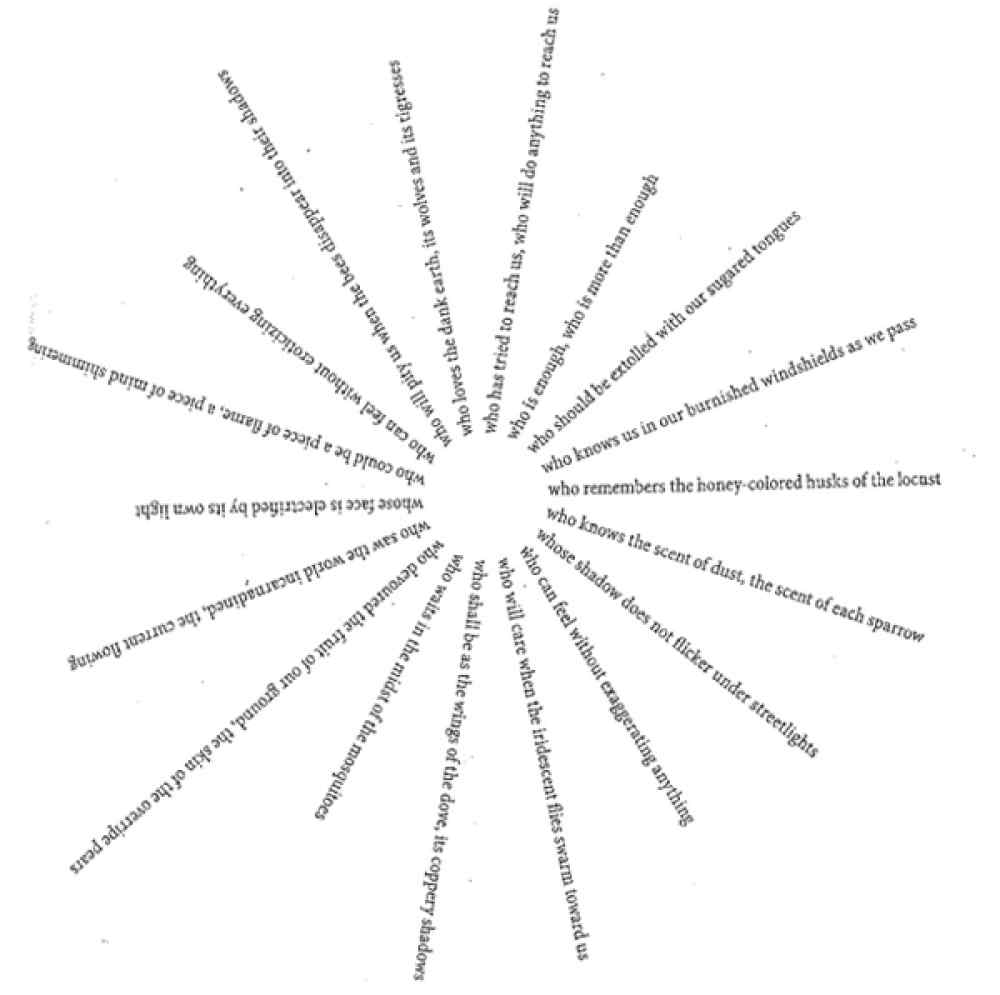
Now, reader, I’d love for you to write down your own thoughts on Mojave, but I also think a great stepping stone for new poetry readers would be to choose any one of the poems I’ve shared here already, or one that’s entirely new, and write your own metacognition on it.
 reasons for rhyme